Wednesday, April 22, 2020

Imaginary History as Secondary Reality

In his letter to W. H. Auden, Tolkien states that “Middle-earth is not an imaginary world” but rather “the one in which we now live” (Letters 183). Instead, he proclaims that the story indeed happens in an imaginary historical period of the world that we inhabit (Letters 183). By admitting the imaginary nature of the history of Middle-earth, Tolkien potentially made it easier for some skeptical readers to appreciate his story as a fictional work. However, by describing his legendarium as combination of true geography and imaginary history, Tolkien seems to contradict his efforts to create the illusion that the story of the LOTR truly has connection to our real history. If the story is purely imaginary and fictional, why was Tolkien so obsessed with connecting the imaginary history with the real history by writing the time travel stories and even inventing the languages to create the sense of reality? Indeed, is that even possible to build connection between real history and an imaginary historical period?
To reconcile this seeming contradiction in Tolkien’s attitude towards mythology, it is critical to first understand the relationship between his notions of “imagination” and “reality.” In The Notion Club Papers, Tolkien uses the voice of the fictional character Jeremy to convey that the mythical and imaginary world is in fact “real” (The Notion Club Papers 228). According to him, this is because that there exist two degrees of reality (The Notion Club Papers 228). The primary level of reality is the one that is currently experienced and seen by people, and the other one exists in the past and only become accessible with the aid of our imagination (The Notion Club Papers 228). According to Ramer, by applying imagination, a future reader can use the documented conversations of the Notion Club to construct a secondary world that is not only real but also has the power to “produce a disturbance in the real primary world” (The Notion Club Papers 228).
In this section, Tolkien essentially suggests that the reality is organized into a two-order structure. While we all live in the primary reality, imagination allows us to mentally simulate a secondary reality. In fact, Tolkien also implies that the true history and the imaginary history in the form of legend and mythology are equally real, because both require us to use imagination as the driving power. Because it is metaphysically impossible for a person to experience either the real history that happened in the distant past or the imaginary history that is purely fiction, he or she must rely on imagination to visualize the secondary reality of real and imaginary history. In this sense, the history that actually happened in the past is not necessarily more real than the imaginary history in mythological world. In today’s class, JSLB proposed a very interesting theory that perhaps Tolkien does not believe in the objectivity of history. While I do not think that Tolkien necessarily rejects the objectivity of history, he certainly uses The Notion Club Papers to argue that the true history and the imaginary history are equally real on the experiential level. Because the two types of history both rely on our imagination to be accessible, I believe that Tolkien also implies the possibility that the two types of history can even merge with each other. For Tolkien’s Legendarium, this merging of the imaginary history and the true history is indeed made possible by the fact that both historical periods happened or is still happening on this same Earth. Knowing that our world was same world that was inhabited by the Elves and Numenoreans, we can more easily accept the possibility that the present history is connected to the history in the LOTR. By connecting the imaginary history of Middle-earth to the present history, Tolkien aims to construct a coherent and grander past that can be experienced by readers through their imagination.
However, what is the point of constructing this greater history that is made of both imaginary and true components? In fact, although Tolkien has his point in arguing that the imaginary and the true history are equally real on the experiential level, why should a reader even care about this imaginary period of the history? Personally, I believe this question can be answered by Tolkien’s conviction that both true history and imaginary history can reflect objective and universal Truth. As we learned from the readings of the past two weeks, Tolkien is deeply convinced that all stories that can make any sense can serve as manifestations of the universal religious and moral Truth. By composing a story that happened in the true world but during an imaginary time that can be potentially connected to present history, Tolkien intends to contend that the Truth reflected by the LOTR has direct implications to our present world and should function as governing principles of our lives. Indeed, as he mentions in his letter to Auden, this universal Truth reflected by the LOTR is God’s “sole right to divine honour” (Letters 183). At this moment, we can see the parallel between the LOTR and the Bible, since the two stories not only communicate the same Truth but also happen in the true world. Although the history of the former is purely imaginary and the history of the latter is true, both histories can be connected to the present history with the support of imagination, thereby instructing our lives. Thus, despite the imaginary nature of the history in the LOTR, Tolkien reproduced this mythological version of the Scripture to reveal the same Truth and to be connected with the present history.
In conclusion, while Tolkien admits that the history of the Middle-earth is imaginary, such history is as real as the actual history that happened in the past, since both types of history must be experienced through human imagination. By situating this imaginary history in the true world, Tolkien creates the possibility for readers to merge the imaginary history with the true of history. Ultimately, this grand history was constructed by Tolkien to illustrate the universal Truth that human should not challenge the authority of God. Besides manifesting the same Truth as the Bible, Tolkien’s Legendarium also narrates a period of history that can be connected to the true history of humankind with the assistance of imagination. Therefore, his Legendarium provides moral and religious guidelines that must be taken seriously by his contemporaries.
-R C

Sources:
The Letters of J.J.R. Tolkien
Sauron Defeated, J.J.R. Tolkien

Exploring "Hall"-marks of Tolkien's Style/s

     Looking over the previous posts on this topic, it appears that many of my predecessors have written in the vein of Shippey and of Le Guin’s earlier examples, with a focus on dialogue and the character revealed therein. I am interested in the expression of style through prose. In this response, I will see what conclusions can be drawn from a comparison of excerpts from Tolkien’s various works.

     I will look at three halls, and I hope you will forgive the long passages since I did not want to give extremely cherry-picked phrases to support my point. First, Meduseld as described in “The King of the Golden Hall” (LOTR bk. III ch. 6):
At length they came to the crown of the hill. There stood a high platform above a green terrace, at the foot of which a bright spring gushed from a stone carved in the likeness of a horse's head; beneath was a wide basin from which the water spilled and fed the falling stream. Up the green terrace went a stair of stone, high and broad, and on either side of the topmost step were stone-hewn seats. There sat other guards, with drawn swords laid upon their knees. Their golden hair was braided on their shoulders the sun was blazoned upon their green shields, their long corslets were burnished bright, and when they rose taller they seemed than mortal men.
…
Inside … the hall was long and wide and filled with shadows and half lights; mighty pillars upheld its lofty roof. But here and there bright sunbeams fell in glimmering shafts from the eastern windows, high under the deep eaves. Through the louver in the roof, above the thin wisps of issuing smoke, the sky showed pale and blue. As their eyes changed, the travellers perceived that the floor was paved with stones of many hues; branching runes and strange devices intertwined beneath their feet. They saw now that the pillars were richly carved, gleaming dully with gold and half-seen colours. Many woven cloths were hung upon the walls, and over their wide spaces marched figures of ancient legend, some dim with years, some darkling in the shade.
Second, the hall of Beorn in “Queer Lodgings” (The Hobbit ch. 7):
After a while they came to a belt of tall and very ancient oaks, and beyond these to a high thorn-hedge through which you could neither see nor scramble.
…
They soon came to a wooden gate, high and broad, beyond which they could see gardens and a cluster of low wooden buildings, some thatched and made of unshaped logs: barns, stables, sheds, and a long low wooden house. Inside on the southward side of the great hedge were rows and rows of hives with bell-shaped tops made of straw.
…
Soon they reached a courtyard, three walls of which were formed by the wooden house and its two long wings. In the middle there was lying a great oak-trunk with many lopped branches beside it. Standing near was a huge man with a thick black beard and hair, and great bare arms and legs with knotted muscles. He was clothed in a tunic of wool down to his knees, and was leaning on a large axe.
…
Following him they found themselves in a wide hall with a fire-place in the middle. Though it was summer there was a wood-fire burning and the smoke was rising to the blackened rafters in search of the way out through an opening in the roof. They passed through this dim hall, lit only by the fire and the hole above it, and came through another smaller door into a sort of veranda propped on wooden posts made of single tree-trunks.
Lastly, the halls of Elu Thingol in “Of The Sindar” (The Silmarillion ch. 10):
There rose in the midst of the forest a rocky hill, and the river ran at its feet. There they made the gates of the hall of Thingol, and they built a bridge of stone over the river, by which alone the gates could be entered. Beyond the gates wide passages ran down to high halls and chambers far below that were hewn in the living stone, so many and so great that that dwelling was named Menegroth, the Thousand Caves.
But the Elves also had part in that labour, and Elves and Dwarves together, each with their own skill, there wrought out the visions of Melian, images of the wonder and beauty of Valinor beyond the Sea. The pillars of Menegroth were hewn in the likeness of the beeches of Oromë, stock, bough, and leaf, and they were lit with lanterns of gold. The nightingales sang there as in the gardens of Lórien; and there were fountains of silver, and basins of marble, and floors of many-coloured stones. Carven figures of beasts and birds there ran upon the walls, or climbed upon the pillars, or peered among the branches entwined with many flowers. And as the years passed Melian and her maidens filled the halls with woven hangings wherein could be read the deeds of the Valar, and many things that had befallen in Arda since its beginning, and shadows of things that were yet to be. That was the fairest dwelling of any king that has ever been east of the Sea.
At first glance, these three passages do not seem too different. They all display language characteristic of Tolkien, such as simple adjectives and what Shippey calls “inverted” sentences (e.g. there stood a platform, up the terrace went stairs, inside the hedge were hives, standing near was a man, there rose a hill). I selected the unifying theme of halls because the passages share imagery too: carved pillars and tapestries, dim wooden halls with holes for smoke in the roof, men standing guard. But I think that these passages alone, without any prior knowledge of the three sources, immediately reveal what sorts of books they are. They define a spectrum between character-based and world-based. In the part from The Hobbit, a lot of the sentences begin with what “they” (Gandalf and Bilbo, in this case) are doing; we see things when our main characters see them. Then in The Two Towers, we get fewer mentions of “them.” We observe the whole moment at once, which includes what the characters are doing but also pure scenery. On the other hand, the description of Menegroth is timeless. It has few references to individuals and tells us only of the place as it eventually appeared.

     Thus, The Hobbit is definitely a novel because it has a clear story that follows clear characters, and I argue that The Lord of the Rings is as well for the same reasons. It is a novel that employs grander prose, as we have said aiming to inform readers that the story is part of a larger world, but it is still situated in precise time and place driven by actions. The absence of that is probably what makes so many people struggle with The Silmarillion – I have often heard it described, and at times myself have described it, as a history book. The passage I quoted above does not even mention guards, as the Meduseld passage does! At least they would be living parts of the description, if static. The book seems dense because the ratio of specific storylines like Beren and Luthien, Turin, and even the battles, to sweeping descriptions of locations and chronicles of years is so heavily skewed towards the latter compared to the other two books. (I assume this is also part of the reason that Beren and Luthien, The Children of Hurin, and The Fall of Gondolin have since been published as their own books.)

     Now that I am thinking about The Silmarillion’s genre, I am led back to our discussion about the purpose of poetry. Dialogue is sparse in this tome, but quickly flipping through I saw absolutely no poems. Why might this be? Perhaps because the poems in The Lord of the Rings and The Hobbit are almost all said by someone, as an entertaining song or to deliver a message or sometimes, as with “Where now the horse and the rider” or Namárië, in a sudden outpouring of emotion. It appears that the impersonal and textbook-like style of The Silmarillion does not allow room for poetry. I will note that the other books have exactly two poems attributed to some later poet instead of a character present in the scene, “From dark Dunharrow in the dim morning” and the Song of the Mounds of Mundburg, but The Silmarillion does not even have poems of this sort. If a main purpose of the poems is to bring Middle-Earth to life, to give the characters and the world depth and dimension through involvement in the oral tradition of legends, then the lack of poetry is surely a cause for readers’ disengagement with The Silmarillion.

     To draw even more texts into my discussion, I want to bring up “Roverandom” and I need to address The Lays of Beleriand. Here Roverandom is visiting the mer-kings palace:
Soon before him he saw the gate of a great palace, made it seemed of pink and white stone that shone with a pale light coming through it; and through the many windows lights of green and blue shone clear. All round the walls huge sea-trees grew, taller than the domes of the palace that swelled up vast, gleaming in the dark water. The great indiarubber trunks of the trees bent and swayed like grasses, and the shadow of their endless branches was thronged with goldfish, and silverfish, and redfish, and bluefish, and phosphorescent fish like birds. But the fishes did not sing. The mermaids sang inside the palace. How they sang! And all the sea-fairies sang in chorus, and the music floated out of the windows, hundreds of mer-folk playing on horns and pipes and conches of shell.
As might be expected from a story composed for Tolkien’s children, the style of this passage is like The Hobbit. It has no inversions, but it has elements that certainly seem childlike to me – all the fish colors, for one, and for some reason the phrases “huge sea-trees grew, taller than the domes” and “But the fish did not sing.” Especially startling is the use of an exclamation mark, which offsets this text from the more serious The Lord of the Rings and The Silmarillion. To give one more very out-of-context quote, “Then the shark bit the only thing it could reach at the moment, which was the shark in front; and that shark bit the next one; and so on, until the last of the seven, seeing nothing else to bite - bless me! the idiot, if he did not go and bite the Sea-serpent's tail!” Things like this, which also appear in The Hobbit (e.g. “through which you could neither see nor scramble”), put them in a separate subclass of novel from The Lord of the Rings. Their style gives them the guise of a spoken tale, not a read novel. And it is this I want to say about the Lay of the Children of Hurin and the Lay of Leithian, which could be brought up as counterexamples to The Silmarillion. Presented as lays, they are implicitly composed by some historical figure and sung by someone whose audience we are allowed to join by reading the poems. These two works fill in the gaps of the book by personalizing their stories and breathing life into history in a way that textbook prose never can.

-- ᛸᚻᚹ

 Note: I realized as an afterthought that the lack of poetry in The Silmarillion may be attributable to Christopher Tolkien’s editing and compilation process. Perhaps if JRRT had made the published book himself he would have inserted some poetry. To be honest, I have no clue how much of the words in The Silmarillion are actually JRRT’s or how much it was really written by his son based on previous ideas and manuscripts.

An Epic (?) Tradition (?)

The Iliad, The Odyssey, the entire epic cycle, Winnie the Pooh, The Hobbit, The Lord of the Rings. What do these stories all have in common? They were/are told out loud.

Our class on Monday made me realize the connections and similarities between these works. They are all such incredible pieces of literature but they seem vastly different. However, I realized some common threads that run through all of them. There are some things that take certain works to another level of importance and memorability. There are some things that make works deserve an oral telling and/or a special place on the shelf.

Rhythm and Rhyme. There is some element of rhythm or meter or in each of these stories. Lord of the Rings achieves this through Tolkien's interspersed poetry and song and through his unique sentence structure. The importance of rhythm is that is allows for a story to be memorized and spoken orally with more ease. Poetry is incredibly important in all the listed stories and in Tolkien's work because it provides a sort of foundation for the entire story. It does a lot of the work of world-building and helps with the continuation of the myth of the entire world. Rhyme is just as important as we see in the "Hey diddle diddle" section. These sections that contain familiar rhymes and rhythms are much more easily spoken out loud than the remainder of a story because they are already known to us. We are not reading and simultaneously speaking words in a pattern we have never seen them in before, rather we are singing along to a song on the radio that we already know. Whether it be the nursery rhymes of the Hobbits or the somber songs of the Dwarves, there is an element of familiarity and comfort within the rhythm and rhyme that allows for an easier oral tradition of the work.

High and Low Diction. One of the most important aspects of our class discussion was our focus on Tolkien's mix of both high and low diction. And yes, I am going to argue that this mix allows for an unparalleled oral tradition. A story of Hobbits with Hobbit like language that contains only simple diction would not hold a readers attention. But a story of of lofty diction and enormous verbiage would be too difficult to comprehend through as a listener. This is exactly why Tolkien's mix of both high and low diction works so perfectly for an audience of listeners. There are words that make you pause and think for a bit but also words that flow by in the stream. Oral stories need this mixture. They need to be accessible yet interesting. In my opinion, this mixture of word use allows for Tolkien's stories to be perfect for an out loud telling. Also, for the one who is speaking, it means that you are not having to continually spit out words that are many letters long constantly. You are able to oftentimes speak in conversational language (which is obviously easier to read and say our loud).

English and Not English. What could be more intriguing than something beautiful that you can't understand? The use of languages other than English in Tolkien's work provides excellent intermissions throughout the story, complete with a beautiful orchestra playing. There has to be a dynamic element in epic stories that are meant to be told out loud and switches between English and other languages provides just enough change to be the perfect basis for the story. We need to be drawn in as listeners (and as readers) and the inclusion of something that we have never heard before is the perfect way to do so. And, on the side of the storyteller, it provides something similar to poetry. It is another break from the English, a chance to switch to another register.

Translation and a Land Far Away. Just as so many epic stories before it, Lord of the Rings is a translation. Tolkien claims that the entire work is to be considered a translation from its original language of Westron. This is a really important fact! The Aeneid, The Iliad, The Odyssey are some of the most important tales in literature to this day and they are translations as well! There is something about the concept of a story that was not originally available to you that makes it even more desirable. These stories are desirable because they are not near to us. These epics come from a land far far away. And that makes them even more interesting. Translation implies an importance, an importance that encouraged the transmission of these stories into other cultures. For a variety of reasons, these stories are important enough to have made their way to us.

So, why is this important? Why does it matter that these stories so perfectly fit into our oral tradition? Well, maybe it doesn't matter. But, we have to remember what Tolkien was attempting to do with his writing. He was trying to create an entire history.

The story that is told in The Iliad has proved to have at least some historical truth to it. And as The Aeneid relates, someone truly did found Rome. These epics that have been so widely translated and passed down and told have truth to them. They have become Myth in its truest form. They have almost become history. And Tolkien's works have all of the same elements. So why can't Lord of the Rings be considered alongside these epic tales, these stories that have been passed down for so many generations? Maybe it can. Let me know what you think.

[AH]

Style as Essential

Ursula K. Le Guin writes in "The Language of the Night" that "in fantasy, instead of imitating the perceived confusion and complexity of existence, tries to hint at an order and clarity underlying existence - in fantasy, we need not compromise. Every word spoken is meaningful, though the meaning may be subtle". Tolkien's writing has been criticized for the seeming absoluteness of good and evil, and the archaic style, which some think is unnecessary, inaccessible, or just boring. Yet each word has been agonized over, each aspect of Middle Earth thought out, and each character's morals perfected. There is no compromise.

The style of Tolkien's writing is not just an addition, but is rather something central to the text. It is a primary was of bringing readers into another world, Faerie, but also to distinguish between the peoples of Middle Earth. Just as myth is integral to language and they evolve with one another, each character's style, and therefore Tolkien's style, evolves with each language created, the lands around them, the history of the people, and the personality of individual characters. And yet all of them clearly fit into the slightly archaic style of Faerie, lending cohesiveness to his massive body of works and distinguishing them from mere fantasy novels. And yet, this language is not nearly so unintelligible as many other fairy stories, where the grammar, word choice, and spelling have been altered so much from contemporary writing that it might have been written hundreds of years ago. Tolkien's reasons for avoiding this path are simple. First, he wanted to write the kind of story that he himself would enjoy reading. Second, he wanted to be able to sell the Lord of the Rings so that he could go on writing the kinds of things that he wanted to write. Most importantly, however, the language is just Faerie enough to "hint at an order and clarity underlying existence".

Le Guin also notes that in Faerie, "lordship is the outward sign or symbol of real inward greatness. And greatness of soul shows when a man speaks." Every time there is dialogue in Tolkien's writing, there is a glimpse of that person's soul, and the style of each person's dialogue more clearly communicates that than anything they may say. The style of speech gives a glimpse of clarity, as the distinction between good and evil, noble and common, selfish or heroic becomes strikingly clear. Varying levels of archaism in a character's speech can even reveal power that is hidden. In Middle Earth, symbols of status, lineage, and the style that is shaped by the former are true indications of character. There are notable exceptions, however, that I would like to explore further. These are the fallen characters, who are able to hide their wickedness by retaining the style of the good: Sauron in Numenor, and Saruman for many years in Middle Earth.

- GM

On Translation, and the Joke that is Westron

In class, we’ve discussed extensively the ways in which Tolkien takes us out of the faerie and pulls us back into it. We’ve spoken about how the tale originally starts out grounded, with characters of the Hobbits that are deeply human and relatable to us. Through Book 1, we travel more and more into the faerie world, the mythical and magical world of the Elves and Dwarves. Tom Bombadil is arguably our first encounter with faerie and once we’re in Rivendell, the realisation sets in that this is a book primarily set in faerie, with powers at work that go far beyond even the imaginations of the simple Hobbits with whom we started the story. In my discussion post, I’m going to analyse how this effect of being transported from the real world to faerie and this weaving in of both elements is created through Tolkien’s use of style and the language it is written in. With this context, let us analyse in detail the Appendix F of the Lord of the Rings, which deals with Westron, the Common Speech.

On reading Appendix F, I was alarmed by the choice Tolkien made to translate proper nouns like Sam Gamgee and Wormtongue and Rivendell. It seems highly out of character for Tolkien, who prides himself on the authenticity and uniqueness of the names in his work. Stylistically, I like the choice. As Tolkien himself points out, the ordinary reader would treat both Elvish and Westron names as equally fantastical or faerie. To us, Karningul and Imladris sound equally out of place, generating the same level of fantasy. If Samwise Gamgee had instead been called Banazir, his introduction would not invoke the same feelings of simplicity, of warmth and an idyllic outlook that we associate with Sam. We saw this phenomenon with the passage about vote-counting we saw in class, which lost most of its charm when it was made clear it was about Washington DC and not a fantasy land.

However, artistically, this is an odd choice. In Letter 190, Tolkien is outraged at the translation of words like the Shire and other nomenclature to their Dutch equivalents. This is at first a pretty neurotic hang-up. If this work, and words like Shire and Wormtongue and Samwise are after all translations of their Westron equivalents, why should he care about their further translation to Dutch instead of English? Both are, in the lore, theoretically equally far-removed from Westron as one another, right? There are two possible answers to this. The first is the one I presume Prof Brown will give. This line of reasoning goes somewhat as follows: Banazir evokes the same feeling within the Legendarium that Samwise does to an average Englishman(or, possibly, to the average human in this generation). Thus the word Samwise is absolutely essential, as it ensures that we, the Readers, associate with the Shire, the same thing that Tolkien himself associated with it: an image of a backward English countryside in a pre-industrial era. To translate it would be to remove the Lord of the Rings from the English countryside that Tolkien imagined it started in. I think this explanation is,at its best, highly contrived and at its worst, it’s just wrong. Not all of us who read this book know what countryside he envisions when he writes this book, so we can’t replicate this. In fact, most of us imagine the Shire as the part of New Zealand where the film trilogy was shot, not England! This means that this choice of untranslatability is not very effective. Even if it was, if made for these reasons, I don’t think it’s a good choice. Tolkien makes his best efforts to make his sub-creation internally consistent and self-contained. To require a knowledge of the English countryside to understand Tolkien’s word choice would be a tragedy, for it would go against the meticulous work Tolkien has put in to make the Legendarium internally consistent and have its own existence out of our world. Tolkien makes every choice in his works to add more detail and believability to his work, so it’s alarming and unusual to see otherwise.

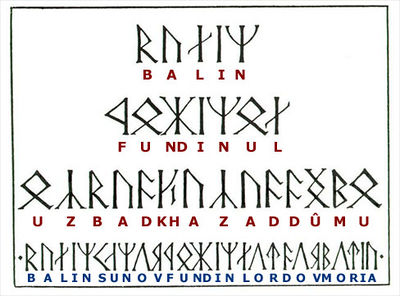
I have a better explanation: Westron is a joke! What do I mean by this? I mean that Westron was never initially conceptualised as a different language from English. Tolkien, after writing his masterpiece, thought to himself about how he could add more detail to this work. He comes up with the brilliant idea to suggest that the Lord of the Rings wasn’t originally written in English, but rather in the ‘Common Speech’, which is Westron. This is a masterful way of adding detail to the Lord of the Rings: by merely making a simple claim in two pages of the Appendix, he manages to add a whole layer of depth to the story. It makes the Lord of the Rings look even more thought out- to an almost insane level. The claims of him being capable of writing the whole novel in Elvish ( which are also not true, the Elvish vocabulary is only exhaustive thanks to fan additions) make the Lord of the Rings seem even more impressive. Here’s why this theory isn’t true. I don’t think Westron is ever mentioned by name in the Lord of the Rings, it’s always referred to as the Common Speech, which could have very well originally meant English. Secondly, there aren’t any functional differences between Westron and English, except for the existence of a deferential pronoun, as Denethor and the Court use. Except, we never see a deferential pronoun used, because the Hobbits magically don’t use it! (Could it be coincidence that the one grammatical difference between Westron and English is used by all except the tellers of our tale? I think not!). With all these hunches and vaguely thought out arguments, I started to look for better evidence for my theory. At a first glance it seems to be so: a quick search shows us that Tolkien created massive corpuses for Quenya or Sindarin or even the Black Speech, but most of the words of Westron we know are actually from Appendix F itself. The replacement and complete erasure of Westron is exhaustive: one would expect the runic inscriptions on Balin’s tomb in Moria to be reproduced as is: giving both the Khuzdul and Westronic versions as they were. Rather, we see the first part in Khuzdul, but the second part is merely English written in the dwarven runes.


This is absurd: as absurd as me taking a picture of something written in Hindi and Sanskrit, then photoshopping it so that the Sanskrit was translated and the translation was transcribed back to Devanagari, the Sanskrit script, and publishing this picture. There isn’t much work on Westron, to be honest. I think this goes to further my theory, as even if JRR Tolkien had perceived himself writing a translation, he would have added a lot more subtle hints towards this, as is his style. I stand by my belief that Westron and Appendix F is a cheeky joke to show us how much in-depth Tolkien has thought about his work and a testament to his dedication to always pushing for a consistent creation, even through post-hoc ways.

It was never Banazir Galbasi. It was always the same Samwise Gamgee we know and love.

RK